
 admin
admin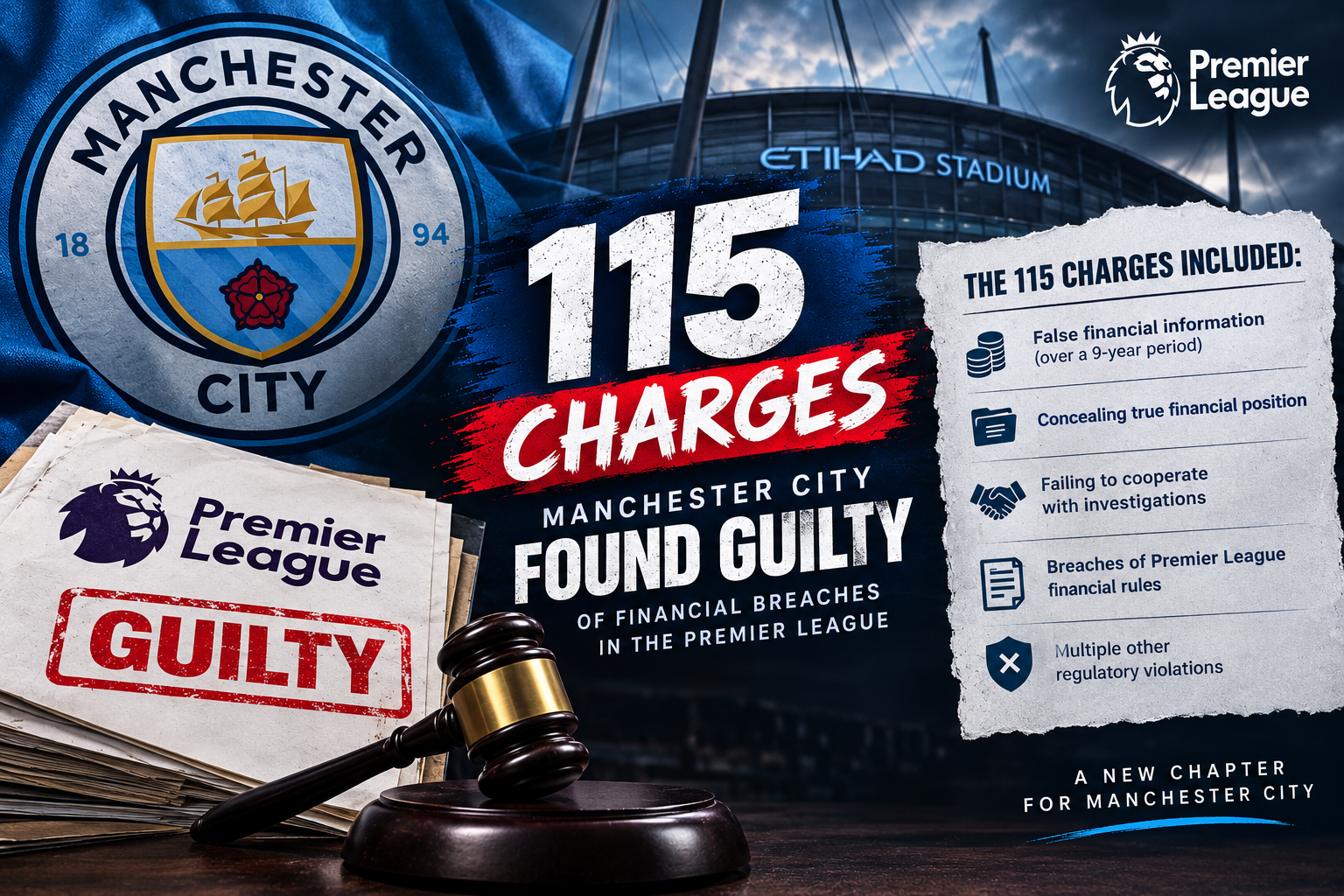
In what is already being labeled as the most consequential administrative decision in the history of modern football, the Premier League has formally delivered a guilty verdict against Manchester City regarding extensive breaches of financial regulations. Following an exhaustive investigation, the independent commission confirmed that the club systematically violated financial fair play rules over a nine-season period between 2009 and 2018.
This landmark ruling has sent shockwaves through the European football landscape, raising fundamental questions about financial governance, competitive integrity, and the future hierarchy of European elite clubs.
1. The Core Findings and Legal Framework
The ruling centers on allegations of systematically misrepresenting financial accounts, inflating sponsorship revenues through related parties, and masking true operational costs over nearly a decade.
- The Scope of Breaches: The commission’s findings encompass over 100 individual charges, primarily focusing on failure to provide accurate financial information that gives a true and fair view of the club’s financial position.
- Failure to Cooperate: A significant portion of the guilty verdict stems from the club’s alleged failure to assist and cooperate with Premier League investigations over multiple years.
2. Potential Penalties and Competitive Repercussions
With the guilty verdict confirmed, focus shifts immediately to the sentencing phase and potential sanctions. While Manchester City has officially announced its intention to appeal the decision, the regulatory framework allows for unprecedented penalties:
- Point Deductions: Heavy point deductions applied to current or upcoming domestic campaigns.
- Stripping of Titles: Retrospective point penalties that could impact league titles won during the period under investigation (2009–2018).
- Expulsion or Demotion: Extreme administrative measures, including potential expulsion from the top flight or revocation of European licenses.
3. The Wider Impact on European Football
The implications extend far beyond the English Premier League, directly affecting UEFA competitions and global transfer dynamics.
Rival clubs across Europe are monitoring the development closely, as a binding sanction could redefine spending power, wage structures, and regulatory enforcement across European football. Furthermore, uncertainty surrounding the club’s future could trigger major shifts in squad retention, player recruitment, and long-term commercial partnerships.
Conclusion: A Precedent-Setting Moment
The Premier League’s ruling against Manchester City marks a critical turning point for sport governance. As the appeal process unfolds, the outcome will inevitably set a definitive legal precedent, establishing the boundaries of financial compliance for elite football clubs for decades to come.