 Mohammed Salah
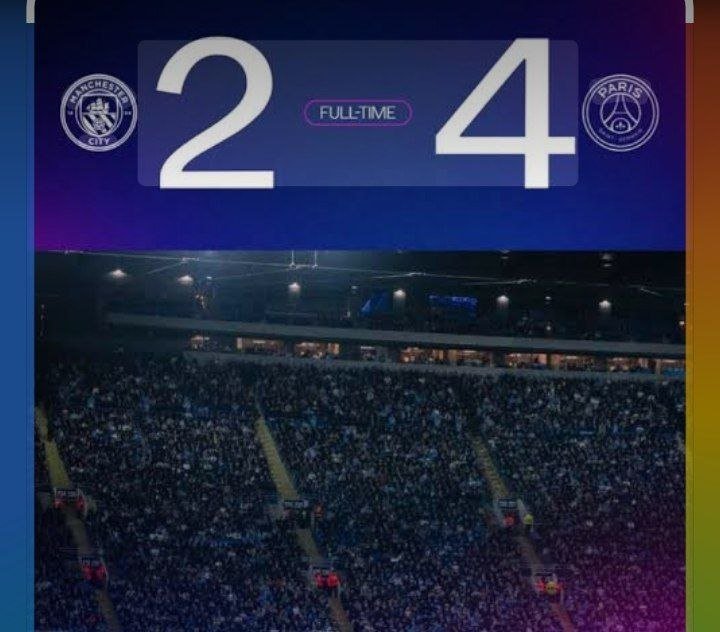
The clash between Manchester City and Paris Saint-Germain was about much more than a 4-2 victory for the French side. It was a night filled with different storylines: PSG dominated the first half, City produced a strong response after the break, and Erling Haaland reached a historic milestone in the UEFA Champions League. Yet none of that was enough to change the final result.
At the Etihad Stadium, Manchester City endured a difficult evening. The English side found themselves three goals behind before launching a comeback that briefly brought hope back to the stands. However, PSG held on to claim all three points, while City manager Enzo Maresca suffered his first defeat since taking charge of the team.
PSG Strike Early and Take Control
Paris Saint-Germain started the match with clear attacking intent and wasted little time making their presence felt. As the game progressed, the French side began finding spaces in Manchester City’s defence, using their movement and ability to take advantage of scoring opportunities.
Désiré Doué opened the scoring in the 13th minute, and Ousmane Dembélé followed just a minute later. The two quick goals immediately turned the match into a difficult challenge for the hosts. They gave PSG a major boost while putting City under early pressure.
The French side continued to dominate and eventually built a three-goal lead before half-time, leaving Manchester City with a mountain to climb. The problem was not simply the scoreline, but also the way City allowed PSG to move freely and reach dangerous areas.
For PSG, the first half was a clear example of how to make the most of opportunities in a major European fixture. The visitors did not need to control every aspect of the game; they simply took advantage of the moments that mattered, and that proved decisive.
Manchester City Fight Back After the Break
Manchester City looked like a different team at the start of the second half. The tempo increased, the hosts became more adventurous going forward, and the pressure on the player in possession intensified as City tried to force their opponents into mistakes.
The improvement was more than a desperate attacking push. City moved the ball faster and found better ways to reach the penalty area, showing much more energy than they had during the opening 45 minutes.
Erling Haaland played a central role in the comeback, scoring twice to bring Manchester City back into the contest and give the team genuine hope of salvaging a better result.
According to Reuters, City finished the match with nearly twice as many shots as PSG and recorded stronger numbers in some attacking metrics. However, those statistics were not enough to secure a result because PSG made better use of their chances and managed to protect their advantage until the final whistle.
This highlights one of football’s most important lessons: a team can improve significantly in the second half and create more chances than its opponent, but it still needs to finish those opportunities at the right moments. A comeback requires a strong performance, but it also demands clinical finishing and the ability to avoid giving the opposition further chances.
Haaland Makes History Despite the Defeat
Despite Manchester City’s loss, Erling Haaland left the match with an impressive individual achievement. He became the fastest player to reach 60 goals in UEFA Champions League history, achieving the milestone in just 60 appearances.
The record highlights the Norwegian striker’s remarkable consistency in Europe’s premier club competition and his ability to find the net against a variety of opponents.
However, the irony was that Haaland’s historic night did not end with a victory for his team. He scored twice and helped bring City back into the game, but the English side could not complete the comeback.
That made the defeat even more frustrating for Manchester City. The team showed in the second half that it could create danger and put PSG under pressure, but the damage caused by its slow start made the task far more difficult.
Maresca’s First Defeat Raises Questions
The loss marked Enzo Maresca’s first defeat since taking charge of Manchester City, and it came against an opponent that showed how effectively it could exploit defensive mistakes in the first half.
Naturally, one match is not enough to judge an entire coaching project, particularly when the team produces such a strong response after the break. Nevertheless, the defeat raises important questions about how City handle aggressive opponents and whether the team can maintain its balance when a match begins to move against it.
The most concerning aspect for Maresca may not simply be conceding four goals, but the way his side lost control during the first half. When a team falls so far behind against a side with PSG’s quality, any attempt to recover requires an extraordinary effort.
Maresca acknowledged that his team performed much better in the second half and felt City deserved a better outcome based on the chances it created. However, he also emphasised the importance of taking those chances without losing the team’s balance, a challenge that will remain crucial in upcoming matches.
PSG Prove That Efficiency Matters More Than Chances
The victory gave Paris Saint-Germain more than a positive result in the Champions League. It showed that the French side could handle the atmosphere of a difficult away ground and turn periods of dominance into goals that made the difference.
However, the second half also revealed that PSG were not immune to pressure. Manchester City managed to reach their goal with greater danger and forced the visitors to endure difficult periods before securing the win.
For that reason, the result should not be viewed as proof that PSG controlled the entire match. The reality was more complicated: PSG dominated the opening period, City produced a strong response after half-time, and the French side ultimately prevailed thanks to the advantage it had built earlier.
This kind of victory can provide PSG with valuable confidence, but it also serves as a reminder that concentration must be maintained throughout the match, especially against teams capable of mounting a rapid comeback.
What Does the Result Mean for Manchester City and PSG?
For Manchester City, the defeat delivers a clear lesson about the importance of strong starts. A team aiming to compete for the Champions League title cannot rely on reacting to difficult situations, even when it has a striker capable of scoring in the toughest moments.
Maresca’s challenge will be to preserve the fighting spirit his players showed in the second half while addressing the mistakes that appeared before the break. Attacking pressure can make a difference, but it must be supported by defensive organisa